

Summary
Federal agencies estimated $186,000,000,000 in improper payments in fiscal year 2025 and about $3,000,000,000,000 since 2003, and GAO puts fraud losses alone at $233,000,000,000 to $521,000,000,000 a year. The records that show where that money went already exist. They sit in program systems, core financial systems, contract files, Treasury payment files and inspector general case systems, and each level of oversight reads its own piece on its own schedule. Lexeme proposes Autonomous Consulting: teams of AI agents that write federal rules as executable tests, run them against every record at every level of oversight, try to explain each violation away, and hand officials a docket of sealed findings priced in recoverable dollars. The method comes from the autonomous testing of distributed databases, where machines already check billions of writes across many systems for a single consistent story. Applied to consulting engagements, procurement and budgeting, it turns the sample-based engagement that ends in a report into a standing set of tests the agency owns, and it makes the recovery of money a daily output of government.
The records that show where that money went already exist.
Federal Losses
The fiscal year 2025 estimate of $186,000,000,000 covers 64 programs at 15 agencies and rose about $24,000,000,000 from the year before. Overpayments account for $153,000,000,000 of it, 19 programs reported error rates of 10% or more, and six reported rates above 25%. Medicare, Medicaid, the Earned Income Tax Credit, SNAP and the Shuttered Venue Operators Grant program account for 73% of the total. Agencies also obligated about $793,000,000,000 on contracts in fiscal year 2025, and the Department of Defense failed its eighth consecutive financial audit in December 2025 with 26 material weaknesses. The government's best recovery year shows where its findings come from. False Claims Act settlements and judgments passed $6,800,000,000 in fiscal year 2025, the most in the statute's history, and more than $5,300,000,000 of that came from qui tam suits brought by whistleblowers, who filed a record 1,297 new cases. The largest recoveries begin with an insider who reads the records and comes forward. Autonomous Consulting gives every agency an insider of its own that reads all of them.
- $153,000,000,000Overpayments inside the fiscal year 2025 estimate
- 19Programs reporting error rates of 10% or more
- $6,800,000,000False Claims Act recoveries in fiscal year 2025, a record
- 1,297Qui tam suits filed in fiscal year 2025, a record
Inter-Level Intelligence
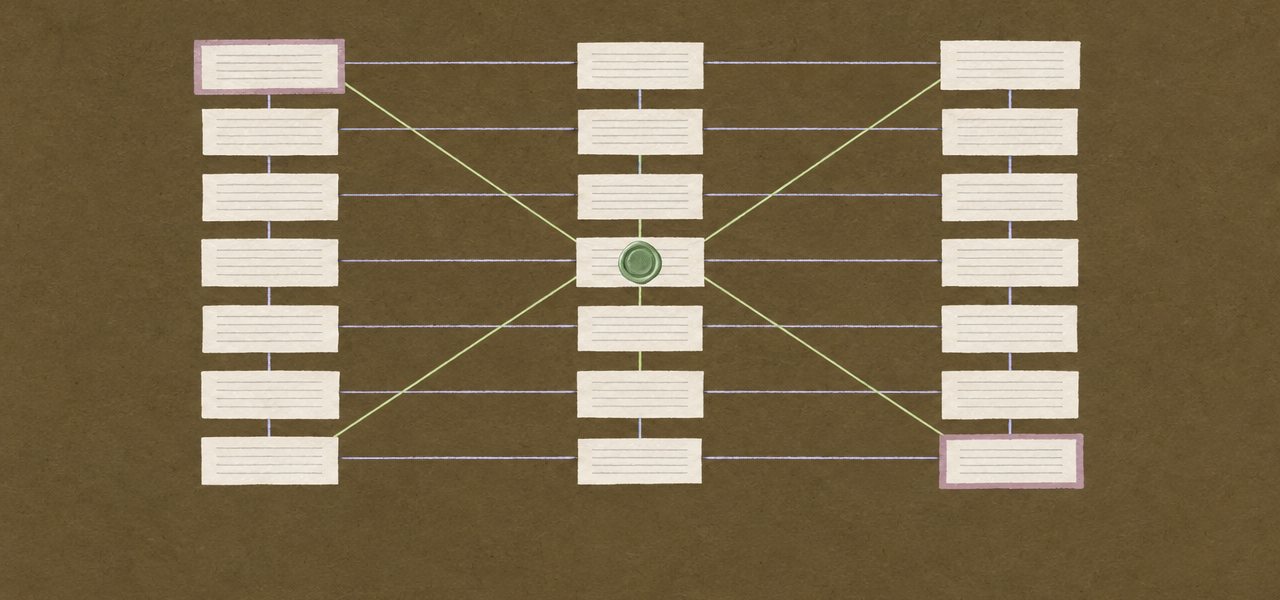
Inter-level intelligence is what results when the levels of federal oversight and the three layers of code are read as one system. The levels run from the program office to the Chief Financial Officer, the acquisition office, the inspector general, Treasury, OMB, GAO and the Department of Justice. The layers are rule code, the statutes, regulations and clauses that say what must happen; operating code, the systems that make it happen; and trace, the records those systems leave. Each level holds a different slice of each layer.
| Oversight level | Rule code | Operating code | Trace |
|---|---|---|---|
| Program office | Authorizing statute, program regulations, grant and contract terms | Eligibility, case management and grants systems | Applications, case files, performance reports |
| Chief Financial Officer | Appropriations law, Payment Integrity Information Act, OMB Circular A-123 | Core financial system, payment approval workflows | Obligations, disbursements, Treasury reconciliations |
| Acquisition office | Federal Acquisition Regulation, agency supplements, contract clauses | Contract writing and invoice approval systems | Awards, modifications, invoices, receiving reports |
| Inspector general | Inspector General Act, government auditing standards | Audit and investigative case systems | Workpapers, hotline complaints, referrals |
| Treasury | Do Not Pay and offset authorities | Payment, Do Not Pay and Treasury Offset Program systems | Payment files, match results, offsets |
| OMB | Circular A-11, apportionment, payment integrity guidance | Budget and apportionment systems | Apportionments, budget execution, payment integrity reports |
| GAO | Internal control standards, antifraud framework | Audit methods | Reports and open recommendations |
| Department of Justice | False Claims Act, Administrative False Claims Act | Case management | Referrals, settlements, judgments |
Today a violation an inspector general finds in one grant program reaches the CFO as a recommendation months later and may never reach the contracting officer at the next agency over. Under inter-level intelligence every finding becomes a test. An inspector general finding becomes an invariant the CFO runs on every payment, a Do Not Pay match becomes a pre-award check in every contracting office, and a GAO open recommendation becomes a standing test whose pass rate is reported each month. The pieces of this already exist. Executive Order 14243, signed in March 2025, directs agency heads to give designated officials full and prompt access to unclassified records, data, software and IT systems to find waste, fraud and abuse, and to seek data from state programs that receive federal money. The Pandemic Response Accountability Committee's analytics center pooled data across more than 50 law enforcement and inspector general partners, supported more than 1,200 investigations and identified more than $2,500,000,000 in potential fraud loss, and Congress extended the committee through 2034 in July 2025. Agencies use far less of their access than they hold. Treasury testified in January 2026 that only 4% of federal programs had completed the legal requirements to use every Do Not Pay database in fiscal year 2024, and inter-level intelligence closes that gap by putting agents to work on the access agencies already have.
- 50+Law enforcement and inspector general partners pooled in the pandemic analytics center
- 1,200+Investigations the center supported
- $2,500,000,000Potential fraud loss the center identified
Consulting Engagements

A federal consulting engagement today starts with a statement of work, spends months on stakeholder interviews and document requests, tests a sample, and ends in a report whose recommendations the agency must then carry out itself. The method and most of the knowledge leave with the contractor. In February 2025 GSA directed agencies to terminate or justify their contracts with ten of the largest consulting firms, which stood to collect $65,000,000,000 in fees, and required a senior official to certify every contract kept as mission critical. The question that memo put to every engagement is the one Autonomous Consulting answers with a number: dollars found and recovered for each dollar spent.
- $65,000,000,000Fees at the ten firms named in the February 2025 GSA memo
- 10Firms whose contracts agencies were told to terminate or justify
| Element | Current engagement | Autonomous Consulting |
|---|---|---|
| Scope | Set through interviews and negotiation | Set by the rule code, with every rule written as a test |
| Coverage | A sample of records | Every record at every level |
| Timing | Months of work, then a final report | Standing runs on records as they arrive |
| Evidence | Workpapers held by the contractor | Sealed packets and a hash tree held by the agency |
| Output | Recommendations | A docket of findings, each with a citation, a recoverable amount and a grade |
| Fee basis | Labor hours | Building and running the tests, with outcome terms where the law allows them |
| What stays | A report | The tests, owned by the agency and kept running |
| Review | The team's judgment | A challenger agent, then the officials who decide |
The report ends the engagement. The tests stay with the agency and keep running.
Procurement

Contract records are the cleanest trace in government. Each payable event is written in SAM.gov, FPDS, a contract writing system, an invoice platform, a Treasury payment file and the contractor's own books, so every invoice can be checked for one consistent story from registration to award, delivery and payment. The FAR overhaul moved into formal rulemaking with proposed rules in June 2026, which means the rule code of federal buying is being rewritten now, and every rewritten clause can be issued with the test that checks it.
| Stage | Tests | Signature |
|---|---|---|
| Registration and responsibility | SAM records against exclusions, Do Not Pay and ownership data; shared addresses, officers and bank accounts across offerors | Replication, stale read |
| Solicitation and award | Bid similarity across offerors; awards bunched just under approval and competition thresholds; requirements split across orders | Replication, leverage timing, write skew |
| Performance and invoicing | Invoices against receiving reports, delivery records and labor records; one service billed twice or to two agencies | Partial commit, duplicate write, phantom write |
| Modifications | Work billed before the modification that authorizes it; scope growth held just under review thresholds | Causality violation, leverage timing |
| Payment | Payments to terminated, excluded or deceased parties; agency books against Treasury | Stale read, divergent replicas |
| Closeout and past performance | Unliquidated obligations; performance ratings against test results | Divergent replicas |
Budgeting
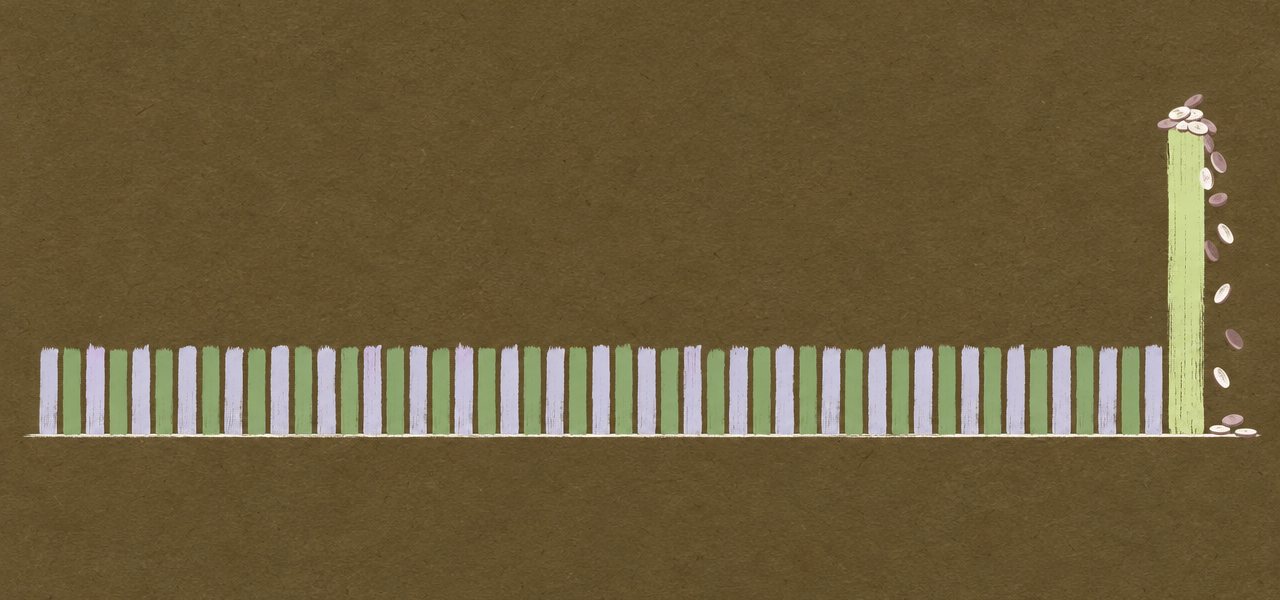
Budget execution is the trace of the budget's rule code: appropriation acts, apportionments, the purpose statute, the bona fide needs rule and the Antideficiency Act. Each is an invariant that can run on every obligation the day it is recorded. Liebman and Mahoney found that agencies spent 8.7% of annual procurement in the last week of the fiscal year against a normal weekly level of 1.9%, and that IT projects bought in that week were two to six times more likely to carry a low quality rating, which is the leverage timing fingerprint at the scale of the whole government. The Department of Defense has set 2028 as its target for a clean audit opinion, and several of its 26 material weaknesses, including fund balance with Treasury, universe of transactions, intragovernmental transactions and unsupported accounting adjustments, are reconciliation problems: copies of the same transaction that disagree. Anti-entropy and history checking were built for exactly that problem.
- 8.7%Share of annual procurement spent in the last week of the fiscal year
- 1.9%Normal weekly level
- 2 to 6×Higher odds of a low quality rating for IT projects bought that week
- 26Material weaknesses in the Defense audit, fiscal year 2025
| Rule | Test | Use in the budget |
|---|---|---|
| Appropriation and apportionment amounts | Obligations and outlays against both, daily | Antideficiency Act violations caught at the transaction |
| Purpose and time | Each obligation's object and period against its appropriation | Misused funds found before the year closes |
| Year-end spending | Weekly obligation rate against the agency's own baseline | Year-end awards flagged for review |
| Unliquidated obligations | Aging of open obligations against activity | Funds identified for deobligation |
| Agency books, Treasury and USAspending | Hash comparison of the copies | Reconciliation gaps located to the transaction |
| Program-level D | The share of each program's spending the tests cannot support | A measured basis for budget requests and for control funding |
The last row changes budget formulation. A program whose tests show a measured share of unsupported spending gives OMB and the appropriations committees a number to budget against, and the tests can fund themselves: under the Payment Integrity Information Act, amounts collected through recovery audits can go up to 25% to financial management improvement and up to 5% to the inspector general.
Recovery
Every finding carries a recoverable amount, what was paid less what the rules and the records support, and the docket sorts findings by recoverable dollars times confidence.
| Grade | Federal recovery path |
|---|---|
| Bright line | Overpayment demand; administrative offset through the Treasury Offset Program; recovery audit |
| Pattern | Inspector general referral; Department of Justice action under the False Claims Act; administrative action under the Administrative False Claims Act for claims up to $1,000,000; statistical sampling to extend the finding; suspension and debarment where findings stack on one entity |
| Data gap | Records demand or inspector general subpoena, with the amount left open until the records arrive |
- $1,000,000Administrative False Claims Act ceiling, up from $150,000
- 25%Share of recovery audit collections that can fund financial management improvement
- 5%Share that can fund the inspector general
Fraud, waste and abuse pay while the expected penalty stays below the gain, p × F < G, where p is the chance of detection, F the penalty and G the gain. Congress raised F for smaller cases when the Administrative False Claims Act lifted the administrative ceiling from $150,000 to $1,000,000. Autonomous testing raises p by driving the cost of each look toward zero. Raising F takes legislation, and raising p takes software. Outcome pricing already has a federal precedent: Medicare pays its recovery audit contractors a percentage of the improper payments they find and collect.
Raising F takes legislation. Raising p takes software.
Working Instrument
Lexeme has built a working instrument of the method for the District of Columbia. The CCI Console reads resale ticket prices against the RESALE Act, D.C. Law 26-181: it writes the Act's lines as tests, runs them on every listing, quote and sale, grades each finding, seals every evidence packet under one hash tree, and sends each finding to the District office that acts on it. Its reference run on a synthetic market of invented events, sellers and platforms returns 267 findings and $1,255.82 paid over the lines. The District's levels mirror the federal ones at a smaller scale, with the Council writing the rule code, DLCP licensing resellers and demanding their records, the Office of the Attorney General recovering money and investigating patterns, and the courts ruling on the sealed packets. The console's core is domain-neutral, so a federal program with a fair basis and a set of rules becomes a new domain on the same engine. The CCI Console runs in a browser and opens on the price band: every paid resale set against the lawful markup over its first sale, the remainder that nothing public explains, and the patterns that point to gouging and collusion, each finding sealed.
| Console test | Fingerprint | Testing tool |
|---|---|---|
| Price or fee over the line | Bright line | Invariant checking |
| Charges or original price not shown | Asymmetry | Invariant checking |
| Checkout above the shown total | Divergent copies | History checking |
| Listed before the seller held the ticket | Causality violation | History checking |
| No first-sale total on record | Data gap | Invariant checking |
| Reprice faster than any input moved | Leverage timing | Distributed tracing |
| Wide spread on identical seats | Actor dependence | Differential testing |
| Price moves with who is asking | Actor dependence | Fault injection |
| Independent sellers moving in lockstep | Replication | Differential testing |
| Price anatomy and variance split | First sale + S(t) + D(u) | Executable specification |
| Synthetic market with planted cases | Validation | Deterministic simulation |
| Run seal | Sealed evidence | Anti-entropy |
| Grade | District outcome | Federal path |
|---|---|---|
| Bright line, paid | Restitution, Attorney General | Overpayment demand or offset |
| Bright line, offered | Notice, DLCP | Pre-payment stop |
| Pattern | Referral to the Attorney General | Inspector general or False Claims Act referral |
| Data gap | Records demand, DLCP | Records demand or subpoena |
| Logged | Ledger | Ledger |
Engagement Model
| Phase | Data | Work | Measure |
|---|---|---|---|
| 1. Public data | USAspending, FPDS, SAM.gov, the Federal Audit Clearinghouse, published IG and GAO findings | Entity-level fingerprints across agencies, with no system access required | Findings the agency confirms |
| 2. Federated pilot | One program's records, inside the agency's boundary | Rules written as tests; agents at autonomy level 2 | Recall on closed cases; false-flag rate |
| 3. Standing runs | The program's records as they arrive | Agents at autonomy level 3 or 4, docket to officials | Dollars recovered per review hour; days from payment to flag |
| 4. Shared tests | Tests and findings passed between agencies | Inter-level intelligence across oversight levels | Repeat findings prevented |
Safeguards
The agents run inside the agency's authorization boundary under FISMA, with FedRAMP authorization for any cloud service, personal records stay under the agency's Privacy Act system of records notices, and only sealed findings leave. Every finding faces the challenger before an official sees it, and every demand, referral and determination is made by an official. The Payment Integrity Information Act already bars recovery audit contractors from making the final determination on an overpayment, and Autonomous Consulting is built on the same division of labor. Each run records its data, thresholds and software versions, so any finding can be reproduced by the agency, the inspector general or a court.
Technical Annex
Thesis
A federal program runs a distributed database: every payable event is written in several systems, and fraud, waste and abuse show up where those copies disagree or break a rule. Autonomous Consulting gives auditors the tools software engineers already use to find those faults.
The Agency as a Distributed Database
| Database concept | Federal equivalent |
|---|---|
| Nodes | Program and financial systems, SAM.gov, FPDS, USAspending, Treasury, contractor books, banks |
| Transaction | An obligation, award, invoice, claim or payment |
| Invariant | A statute, regulation, clause or appropriation limit |
| History | Each system's time-stamped record of the transaction |
| Anomaly | Copies that disagree, or a write that breaks a rule |
| Repair | Demand, offset, recovery audit, settlement, debarment |
Testing Tools in Federal Audit
These come from production engineering: QuickCheck, Jepsen, Chaos Monkey, Dynamo, FoundationDB, Dapper and TLA+.
| Tool | Federal use |
|---|---|
| Invariant checking | Every rule run against every record |
| History checking | One transaction's records checked for one consistent story |
| Differential testing | One contractor's pricing to two agencies compared |
| Fault injection | Authorized test claims, records requests and site visits |
| Anti-entropy | Agency, USAspending and Treasury copies compared by hash; the same tree seals the evidence |
| Deterministic simulation | Synthetic programs with planted schemes, run before any real one |
| Distributed tracing | One dollar followed from appropriation to payment |
| Executable specification | The rules written as tests, each with its citation |
Anomalies and Fraud, Waste and Abuse
| Anomaly | Federal signature | Category |
|---|---|---|
| Partial commit | Invoice approved, receiving report blank | Abuse, fraud |
| Duplicate write | One invoice paid twice | Waste |
| Stale read | Payment to an excluded or deceased party | Waste, fraud |
| Write skew | Purchases split under a threshold | Abuse |
| Causality violation | Work billed before the award | Fraud |
| Phantom write | A payee or service that does not exist | Fraud |
| Divergent replicas | Agency books disagree with Treasury | Fraud, waste |
General Model
Every payment splits into y = B + S + D: B is what the rules and records support, S is what legitimate inputs explain above it, and D is what the payee adds. A bright line is y past a rule, a pattern is structure in D across many records, and a data gap is a missing B, reported and never estimated.
Five Fingerprints
| Fingerprint | Analogy | Signature |
|---|---|---|
| Asymmetry | Partial commit | Payment fields complete, control fields blank |
| Replication | Cloned writes | Matching bids, addresses or bank accounts across independent parties |
| Leverage timing | Load at the boundaries | Awards bunched under thresholds or at fiscal year end |
| Actor dependence | Routing by identity | The government charged more than commercial buyers for the same thing |
| Probe response | Fault injection | Late, partial or edited answers to an authorized test |
Fingerprint Detail
Each fingerprint is a signature honest operation does not leave. Thresholds are starting points, tuned per program, and every run records the values it used.
Tests
| Fingerprint | Measure | Starting threshold | Challenger tries first | Grade |
|---|---|---|---|---|
| Asymmetry | Payment fields filled minus control fields filled | Gap of 0.10 over 30 or more items | A system not yet produced; a field the record type does not need | Pattern; one item missing a required control is a bright line |
| Replication | Similarity between parties that should differ | Text overlap of 0.80; any shared bank account | Standard forms; disclosed common ownership | Pattern |
| Leverage timing | Excess just past a threshold or inside a window | Twice the fitted count; rate ratio of 2 | Real deadline demand; rules that end at a threshold | Pattern |
| Actor dependence | Price gap by payer with S held fixed | Permutation p below 0.05 and a gap of 10% | Payer rules that change the service; small cells | Pattern, sent as a referral |
| Probe response | Lateness, gaps and edits after an authorized test | Any deadline missed | A documented backlog; a lawful refusal | Missed deadline, bright line; missing items, data gaps |
Federal Examples
| Fingerprint | Contracts | Grants | Benefit payments |
|---|---|---|---|
| Asymmetry | Invoice approved, receiving report blank | Drawdown made, reports missing | Claim paid, eligibility check blank |
| Replication | Matching bids from separate firms | Reports reused across recipients | Several payees on one bank account |
| Leverage timing | Orders just under the micro-purchase threshold | Spending bunched at the end of the award | Billed time just past a payment floor |
| Actor dependence | Government charged above commercial price | Indirect costs that follow the funder | Medicare billed more than private payers |
| Probe response | Answers to audit requests | Answers to monitoring visits | Answers to records requests |
Stacking
Independent fingerprints on one payee build the case, and the ones that stack across agencies are where inter-level intelligence pays most.
Agent Team
| Role | Counterpart | Duty |
|---|---|---|
| Intake | Records custodian | Hash and index every source |
| Rules | Agency counsel | Write the rules as tests |
| Testers | Auditors | Run the tests |
| Prober | Inspector general investigator | Run authorized probes |
| Challenger | Quality assurance | Explain each finding away with S |
| Recovery | Payment integrity analyst | Price each finding and draft the demand |
| Sealer | Evidence custodian | Seal the packets |
| People | CFO, inspector general, counsel | Decide demands and referrals |
Autonomy Levels
| Level | Agents | People |
|---|---|---|
| 0, manual | None | Sample, test and write |
| 1, assisted | Extract and index | Test and write |
| 2, supervised | Run the tests | Challenge and decide |
| 3, autonomous finding | Test, probe, challenge, seal | Decide demands and referrals |
| 4, continuous | Standing runs as records arrive | Act on flags |
Validation
| Stage | Measure |
|---|---|
| Simulation on planted schemes | Recall and false-flag rate |
| Closed audits read again | Findings matched, missed and added |
| Standing runs on one program | Dollars recovered per review hour |
Open Questions
| Question | Stake |
|---|---|
| Which office hosts the agents | What records they see |
| Thresholds per program | The false-flag rate |
| What stands in for S | What the challenger may explain away |
| Authority for outcome fees | How the work is paid |
Sources
- GAO, Payment Integrity, GAO-26-108694, April 2026
- GAO, Fraud Risk Management, GAO-24-105833, April 2024
- GAO, A Snapshot: Government-Wide Contracting, Fiscal Year 2025, May 2026
- Department of Justice, False Claims Act statistics for fiscal year 2025, 16 January 2026
- Breaking Defense, Pentagon audit results for fiscal year 2025, 19 December 2025
- Department of Defense, Agency Financial Report, fiscal year 2025, Other Information
- Executive Order 14243, 20 March 2025
- Pandemic Response Accountability Committee, semiannual report, April through September 2025
- Treasury written testimony, House Committee on Oversight, 13 January 2026
- FedScoop, GSA memo on consulting contracts, 28 February 2025
- Faegre Drinker, government contracts review, second quarter 2026
- Liebman and Mahoney, use-it-or-lose-it budget rules, NBER Working Paper 19481
- 31 U.S.C. 3352, recovery audits
- Covington, Administrative False Claims Act, January 2025
- ASHA, Medicare recovery audit contractors